




Start With the Unit Door Lock
The first item on any move-in security checklist is the lock on your own front door. You have no way of knowing how many copies of the previous tenant’s key are still in circulation. Former residents, cleaning services, contractors, and property management staff may all have had access. The most reliable way to take control of that situation is to have the lock rekeyed as soon as you move in.
Rekeying a lock changes the internal pins inside the cylinder so that all previous keys stop working. It is a cost-effective option that does not require replacing the entire lock hardware. If the existing deadbolt is worn, outdated, or a lower-grade model, a full lock installation may be the better choice. We can inspect the hardware and give you a clear recommendation based on what is actually there.
Check the Deadbolt and Door Frame Condition
A deadbolt is only as strong as the door frame around it. In older Chicago condo buildings, door frames can show wear from years of use, seasonal temperature changes, and building settling. When you move in, check whether the screws around the strike plate are properly seated and the wood or metal is intact.
- Soft spots or cracks around the door frame indicate the frame may need reinforcement
- Gaps near the strike plate reduce resistance to forced entry
- High-security deadbolts with longer strike plate screws offer significantly better protection
- Worn or loose hinges should also be tightened or replaced before settling in
For a deeper look at deadbolt options suited to Chicago condos, the guide to high-security deadbolts for Chicago homes and condos covers what to look for in residential hardware.
Understand Building Entry and Shared Access Systems
Most Chicago condo buildings use some form of shared access control at the main entry, whether that is a key fob system, a keypad, or a video intercom. When you move in, confirm with building management that your access credentials are newly issued and that any credentials tied to the previous occupant have been deactivated. This step is often overlooked because residents assume it is handled automatically, but it is worth verifying directly.
If your building uses an intercom or video entry system, make sure your unit is properly connected. Buildings with aging intercom infrastructure can have wiring or programming gaps that leave a unit unresponsive at the front door. Intercom repair and installation services can address those issues for both individual units and building-wide systems. Modern video intercom systems allow residents to verify visitors and grant access from a smartphone, which is a practical improvement over older audio-only panels.
Consider a Smart Lock for Your Unit Door
Many Chicago condo residents are choosing to add a smart lock to their unit door alongside or instead of a traditional keyed deadbolt. Smart locks allow keyless entry through a PIN code, a mobile app, or a key fob, and they make it easy to grant temporary access to guests or service providers without duplicating physical keys.
Before purchasing a smart lock, check with your condo association to confirm whether there are any restrictions on lock hardware for unit doors. Some buildings require locks that maintain a standard keyed entry option as a secondary method. A professional smart lock installation ensures the device is correctly fitted, programmed, and compatible with your existing door hardware.
Review Key Control From Day One
Good key control habits from the start will protect you throughout your time in the building. Keep these practices in mind:
- Limit the number of copies of your unit key that are in circulation
- Use a reliable key duplication service rather than a self-service kiosk, which can produce keys with inconsistent cuts
- Keep a simple record of who has a copy and retrieve spares when they are no longer needed
- Ask your property manager about their master key control policy and how keys are tracked
Understanding those practices helps you make informed decisions about your own unit security. One Chicago condo resident found that simply asking those questions prompted building management to update their key log and reissue master keys that had not been audited in years.
Make Security Part of Your Move-In Routine
Rekey your unit lock before unpacking, verify your building access credentials, inspect your door frame and deadbolt, and consider whether a smart lock fits your lifestyle and building rules. These steps take relatively little time but have a lasting impact on how secure your home feels.
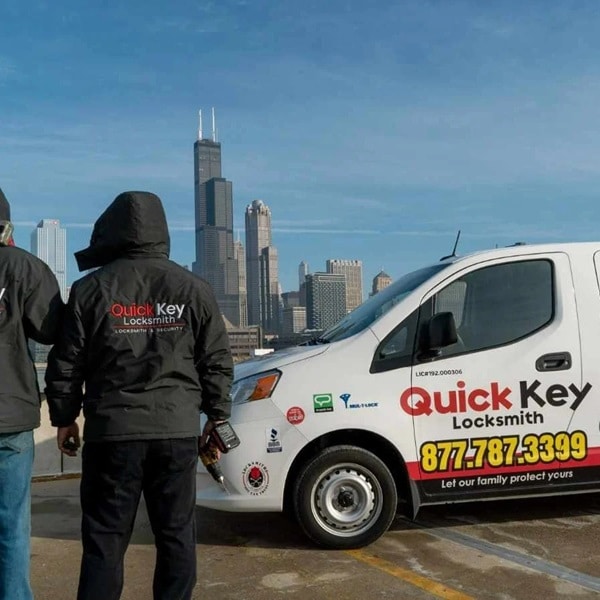
Quick Key Locksmith and Security has been serving Chicago and the Chicagoland area since 2013. We provide residential locksmith services for condos, apartments, and single-family homes across the region, with mobile service during business hours and two walk-in storefronts in Wheaton and Elk Grove Village. Our work is backed by a 6-month labor warranty and a 1-year parts warranty. Contact us by phone or stop by either location to talk through your move-in security needs.