


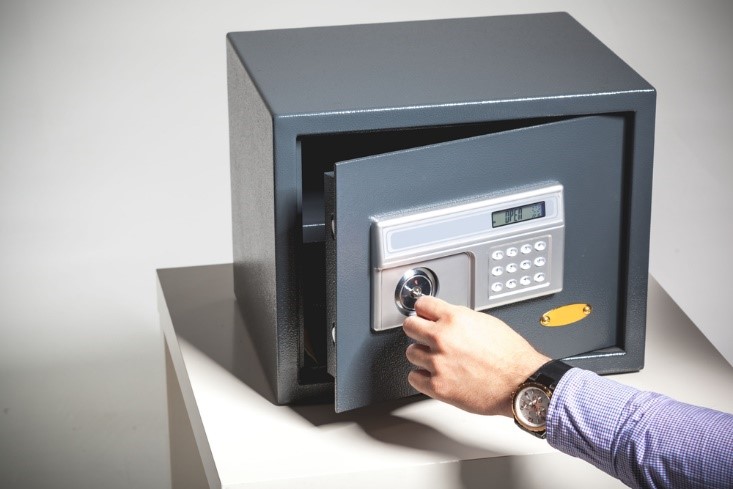
Quick Key Locksmith and Security has been helping Chicago-area residents and businesses with safe sales, installation, and services since 2013. We work with a wide range of safe types across our two storefronts in Wheaton and Elk Grove Village, and this question comes up often. This guide covers how each type of safe is built, what it protects against, and how to decide which one fits your situation.
What Is a Fire Safe and What Does It Actually Protect?
A fire safe is designed to protect its contents from heat and smoke damage during a structure fire. These safes are rated by how long they can maintain a safe internal temperature while exposed to extreme external heat. Common ratings include 30-minute, 1-hour, and 2-hour fire ratings. The internal temperature threshold for paper documents is typically 350 degrees Fahrenheit, while digital media requires a lower threshold of around 125 degrees, so not all fire safes protect electronics.
Fire safe construction uses insulating composite materials between steel walls that absorb heat and release moisture to keep the interior cool. The National Fire Protection Association notes that residential fires can reach temperatures above 1,100 degrees Fahrenheit, which is why that insulation needs to be substantial. What fire safes are not built to do is resist a physical attack. The same soft material that protects against heat makes the body of the safe easier to breach with tools.
What Is a Burglary Safe and How Is It Different?
A burglary safe is engineered to resist forced entry. The walls, door, and locking mechanism are built from hardened steel designed to defeat prying, drilling, cutting, and punching. Underwriters Laboratories grades burglary safes based on how long they can resist a skilled attack with professional tools. Entry-level ratings like B and C are common in residential settings, while higher-rated safes such as TL-15 and TL-30 are typically found in commercial environments.
The tradeoff is that dense steel construction provides little insulation against fire. In a structure fire, the contents of a burglary safe can be damaged even if the safe is never breached. For businesses storing cash or high-value items, a burglary safe is the right tool, but it should not be mistaken for fire protection. Our safe locksmith services page covers the range of safe types we work with, including both fire-rated and burglary-rated models.
Can You Get Both Fire and Burglary Protection in One Safe?
Yes. Composite safes, sometimes called fire-and-burglary safes or RSC fire safes, are rated for both threats. They are heavier and more expensive than single-purpose safes, but they offer meaningful protection against fire and forced entry. For most Chicago homeowners storing a mix of documents, valuables, and firearms, a quality composite safe is the most practical option.
Not all safes marketed as combination units carry verified third-party ratings. Look for UL listings for both categories, not just marketing language on the box. If you are unsure what a rating label means, we can walk you through it before you buy. We also offer safe moving services across the Chicagoland area if you need help relocating a safe you already own.
Which Safe Type Is Right for Your Chicago Home or Business?
The right safe depends on what you are storing and where your primary risk lies. Use these guidelines to narrow it down:
- Store documents, passports, or media: prioritize a fire-rated safe with the appropriate temperature threshold
- Store cash, jewelry, or firearms: prioritize a burglary-rated safe or RSC-rated model
- Store a mix of both: look for a UL-listed composite safe with verified fire and burglary ratings
- Commercial use with daily cash handling: consider a TL-rated burglary safe with a deposit slot
For businesses, the risk profile typically skews toward burglary. A burglary-rated safe with a UL-listed lock is the standard starting point for most commercial applications. Businesses that also need fire protection for records should look at composite models or a separate fire-rated filing cabinet for documents. Our commercial locksmith services include safe consultation and installation for businesses across Chicago and the suburbs.
Safe Installation Matters as Much as the Safe Itself
Even the best safe provides limited protection if it is not properly anchored. A portable fire safe on a shelf can be picked up and carried out in seconds. Burglary safes are most effective when bolted to a concrete floor or secured within a wall or floor installation. Proper anchoring also protects against tipping during a break-in attempt.
We handle safe installation across Chicago and the surrounding suburbs, including anchoring and placement consultation. Our team can walk you through floor anchoring options and the difference between surface-mount and recessed installation before you make a final decision. For more on placement, review our wall safe vs floor safe guide, and for a deeper look at what fire ratings mean, see our fireproof safe ratings explainer.
Talk to Quick Key Before You Buy
Fire safes protect documents and media from heat damage. Burglary safes protect valuables from forced entry. Composite safes address both, and proper installation makes either type significantly more effective. Getting the right safe from the start means you are not replacing contents that were never actually protected.
Quick Key Locksmith and Security serves Chicago and the Chicagoland area with safe sales, installation, combination changes, lock repair, and moving services. We have two walk-in storefronts in Wheaton and Elk Grove Village, and we offer mobile service to homes and businesses across the region during business hours. Contact us by phone or stop by to get straightforward guidance on the right safe for your needs.