

River North, IL Office Rekeying: How to Handle Employee Turnover Securely

River North, IL Office Rekeying: How to Handle Employee Turnover Securely

Every time a key-holding employee leaves your River North office, a security gap opens that most business owners do not close quickly enough. That key still works until you take action, and there is rarely a reliable way to confirm every copy has been returned. Office rekeying is one of the most practical steps you can take to close that gap without replacing hardware or overhauling your entire access system.

Why Employee Turnover Creates a Real Security Risk

Over the course of employment, keys get copied, passed along, or simply forgotten about when someone moves on. River North is a dense commercial corridor with multi-tenant buildings, shared lobbies, and high foot traffic. An unaccounted key in that environment carries real risk. Rekeying the affected locks after a departure makes every previously issued key permanently inactive without touching the door hardware.

Staff members who should prompt a rekey after departure include:

  • Full-time and part-time employees with office keys
  • Contractors or vendors given temporary building access
  • Cleaning crews issued after-hours entry keys
  • Anyone who held a master key or multi-area access key

What Office Rekeying Actually Involves

Rekeying changes the internal pin configuration inside a lock cylinder so that old keys no longer operate it. A locksmith removes the cylinder, adjusts the pin stack to match a new key cut, and reinstalls everything. The lock and door hardware stay in place. Only the key that opens it changes. For offices with multiple entry points, we can rekey all affected cylinders in a single visit and match them to one new key if your access plan calls for it.

This is also a good moment to evaluate whether your master key system needs updating. If the departing employee had access to multiple areas, rekeying individual locks may not be enough. We can assess your current key hierarchy and recommend the right scope of work before the visit.

How Often Should River North Offices Rekey After Staff Changes?

The answer is straightforward: every time a key-holding employee leaves. Many office managers wait until multiple departures accumulate before scheduling a rekey, but that approach leaves the building exposed for an extended period. Treating rekeying as a standard part of your offboarding checklist, the same way you deactivate a badge or revoke software access, is a cleaner and more reliable policy.

If your office has seen significant turnover over the past year and has not rekeyed since, it is worth scheduling a review. A commercial locksmith can walk through your space, identify which cylinders are at risk, and put together a plan that fits your building layout and budget.

Rekeying vs. Replacing Locks: Which Makes More Sense?

For most employee turnover situations, rekeying is the right call. It costs less than replacing locks, takes less time, and achieves the same security outcome. Lock replacement makes more sense when hardware is worn, damaged, or no longer functioning reliably. A technician can give you an honest assessment of whether rekeying alone is sufficient or whether an upgrade would serve you better long-term.

For a deeper look at both options, the Quick Key guide on rekeying vs. lock replacement walks through the decision clearly. Rekeying handles the key control problem, while replacement addresses both key control and hardware condition at the same time.

Building a Smarter Key Control Policy for Your Office

Rekeying after turnover is a reactive measure, but the stronger approach is to build a proactive key control policy before turnover happens. A solid policy includes:

  • Keeping a log of every key issued, to whom, and when
  • Establishing a clear key return procedure at offboarding
  • Scheduling periodic cylinder updates rather than waiting for a departure to trigger action
  • Evaluating whether high-turnover entry points are better served by access control installation

Credential-based access lets you deactivate a user’s entry without any physical key to track down. A locksmith familiar with commercial buildings can help you weigh both options based on your specific layout and staffing patterns.

Protect Your River North Office with Professional Rekeying

Employee departures are inevitable, but the security risk that comes with them does not have to be. Rekeying your office locks after turnover is a direct, cost-effective way to keep your building secure and your key control policy intact. It protects your staff, your assets, and your clients without disrupting operations or requiring major hardware changes.

Quick Key Locksmith and Security has been serving Chicago and the Chicagoland area since 2013. We provide commercial rekeying, master key system updates, and access control services for offices across River North and the surrounding neighborhoods. Our mobile technicians come to your location during business hours, and you can also stop by our walk-in storefronts in Wheaton or Elk Grove Village to discuss your needs in person. Contact Quick Key Locksmith and Security to schedule your office rekeying appointment today.
Oak Brook, IL Access Control for Offices: Setting Access Levels That Make Sense

Oak Brook, IL Access Control for Offices: Setting Access Levels That Make Sense

Managing who gets into which rooms in your Oak Brook office should not feel like a guessing game. If your building still runs on physical keys with no way to track who used them or when, access control for offices in Oak Brook, IL gives you a smarter alternative. The real challenge for most office managers is not whether to install a system, but how to structure it so the right people get through the right doors without creating a management headache. This guide walks through a practical framework for setting access levels that reflect how your office actually operates.

What Is an Access Level and Why Does It Matter?

An access level is a permission profile assigned to a credential holder that defines which doors they can open and during what hours. Instead of giving everyone a physical key to every door, you assign each person a profile that matches their role. Common examples include:

  • Front-desk staff with access to the lobby and their workstation area
  • Warehouse supervisors with access to the loading dock, storage room, and main floor
  • Executives with unrestricted access across all zones
  • Vendors or cleaning crews with limited access tied to specific time windows

When a credential is lost or an employee leaves, you deactivate that profile in the software rather than rekeying every lock. For Oak Brook businesses in multi-suite office parks or shared commercial buildings, that kind of precision matters.

How to Map Your Office Zones Before Programming Anything

Before any hardware gets installed, the most useful step is drawing out a simple zone map of your office. Walk through your space and identify every door that separates a secured area from a general-access area. Common zones include the main entrance, private offices, server rooms, storage areas, conference rooms, and exterior doors. Once you have that list, group your staff by role and match each group to the zones they genuinely need. Overly permissive access levels are one of the most common mistakes businesses make because they eliminate the audit trail value that makes access control worth having. A commercial locksmith familiar with office environments can review your layout and help you build a zone structure that fits your workflow before any programming begins.

Credential Types That Work Well in Office Environments

Oak Brook offices typically choose from three main credential types:

  • Key cards or fobs: The most common choice for multi-employee offices because they are easy to issue, easy to deactivate, and require no special training
  • PIN keypads: A good fit for low-traffic doors where a simple code-based entry is enough
  • Mobile credentials: Tied to a smartphone app and managed through cloud-based platforms like Brivo cloud access control, which lets you manage all credential types from a single web dashboard

The right choice depends on how many doors you are securing, how often your staff roster changes, and whether your building has shared entry points with other tenants.

Time-Based Access: A Practical Layer Most Offices Skip

Time-based scheduling lets you restrict when a credential is valid, not just where it works. A cleaning crew might have access only between 6 p.m. and 9 p.m. on weekdays. A part-time employee might only have access during scheduled work hours. These rules add a layer of control that physical keys simply cannot replicate. When you pair time-based scheduling with an access log, you get a clear record of who entered which door and when, which is valuable for both security reviews and HR purposes. Our technicians can program these schedules during installation and walk your team through how to adjust them as your needs change.

When to Integrate Access Control with Other Security Systems

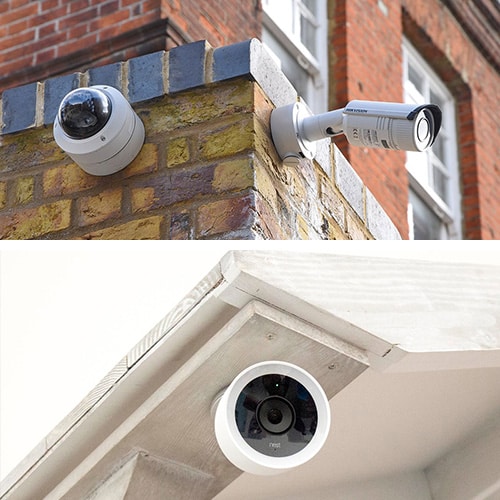
For many Oak Brook offices, access control works best as part of a broader security setup. Pairing your system with commercial CCTV cameras means every door event is matched with video footage. Adding an intercom system at your main entrance lets your team screen visitors before granting access. These integrations do not need to be complicated or expensive to be effective. We help businesses across Chicagoland build setups that fit their actual needs and budget, with honest recommendations and no unnecessary upsells.

Getting Your Oak Brook Office Set Up the Right Way

A thoughtful access control plan protects your business assets, gives you a reliable audit trail, and removes the vulnerability that comes with untracked physical keys. Quick Key Locksmith and Security has been serving Chicago and the Chicagoland area since 2013, including businesses throughout Oak Brook and the surrounding suburbs. We install and program standalone and integrated access control systems for offices of all sizes, with warranty-backed labor and parts. Contact us to discuss your office layout and access needs, or stop by our storefronts in Wheaton or Elk Grove Village during business hours. Mobile service is available across the Chicagoland area for on-site assessments and installations.

West Loop Storefront Door Hardware: What to Inspect Before It Fails

West Loop Storefront Door Hardware: What to Inspect Before It Fails

A storefront door that worked fine last season can start binding, drifting, or failing to latch with little notice. West Loop businesses deal with some of Chicago’s heaviest commercial foot traffic, and that constant use puts real stress on every component in your door system. Inspecting your storefront door hardware in West Loop Chicago on a regular schedule is one of the most practical ways to avoid a failure that locks out customers or leaves your building exposed overnight. Here is what to check and when to call in a professional.

Why Storefront Door Hardware Wears Down Faster Than Expected

Commercial doors are built for heavy use, but they are not maintenance-free. Chicago’s seasonal temperature swings cause door frames to expand and contract, accelerating wear on every moving part. West Loop buildings, many of which sit in older mixed-use structures, face additional stress from frame settling and misalignment over time. Common causes of premature hardware wear include:

  • Repeated thermal expansion and contraction through Chicago winters and summers
  • High daily door cycle counts in busy retail and restaurant corridors
  • Frame settling in older mixed-use buildings
  • Deferred maintenance allowing small issues to compound

What to Check on Your Door Closer

The door closer controls the speed and force at which your door swings shut. When it starts to fail, the signs appear well before a complete breakdown. Watch for doors that slam shut with excessive force, drift without closing fully, or swing back open after releasing. Fluid leaking from the closer body means the internal seals are degrading. A closer that no longer holds its adjustment or has visible cracks in the housing needs attention before it fails entirely. We provide professional commercial door closer repair and installation for businesses across Chicago and the Chicagoland area.

Hinges and Continuous Hinges: Where to Look for Wear

Standard butt hinges on high-traffic commercial doors wear at the pin and barrel faster than most people realize. A loose, squeaking, or visibly fatigued hinge creates misalignment that affects the entire door. When the door drops even slightly out of square, latching becomes inconsistent and the lock hardware compensates for a gap it was not designed to handle. Many West Loop storefronts with heavy aluminum or glass doors are better served by continuous hinges, which distribute load across the full height of the door rather than concentrating stress at two or three points. If your hinges show corrosion, stripped screws, or uneven gaps at the door edge, those are signs to address now. Learn more about upgrading on our continuous hinge installation page.

Lock Cylinders and Deadbolts: Warning Signs to Know

A lock cylinder that requires extra force to turn, feels sticky in cold weather, or has visible wear around the keyway is telling you something. Over time, internal pins accumulate debris and wear down, making the lock harder to operate and less reliable. Watch for these specific signs:

  • Deadbolts that do not throw fully or drag against the strike plate
  • Lock hardware that rattles in the door
  • Cylinders that require repeated attempts to turn
  • Keys that catch or stick during normal operation

In some cases, a rekeying or cylinder replacement is the right call. In others, the underlying issue is door alignment rather than the lock itself. Our team handles professional lock installation and repair for commercial properties throughout Chicago.

Exit Devices and Panic Hardware: A Safety and Function Check

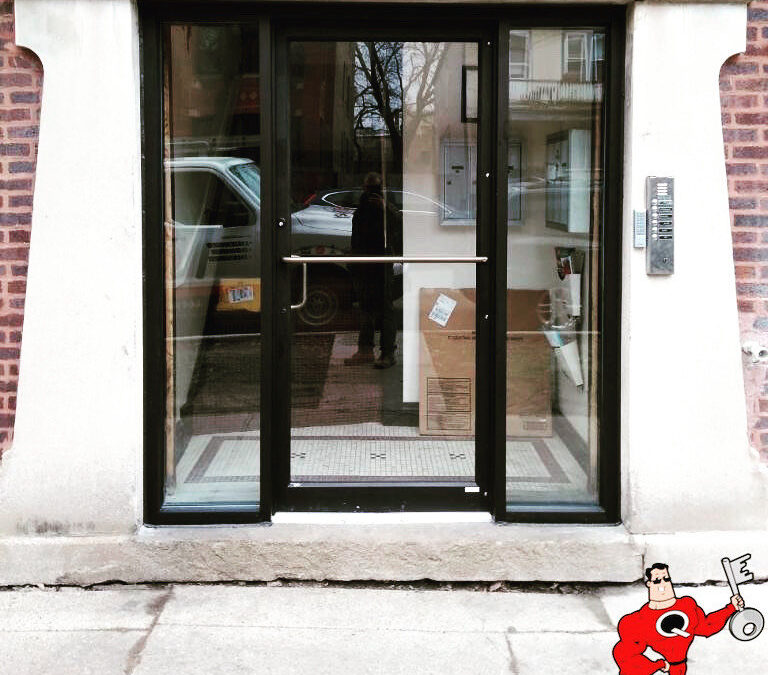
If your storefront uses a panic bar or exit device, that hardware needs to be part of any regular inspection. A bar that is stiff, misaligned, or failing to retract the latch smoothly creates both a security gap and a safety concern. Check that the bar engages and releases cleanly, that mounting hardware is tight, and that the latch bolt retracts fully when pressed. Corrosion on the strike plate or a latch that does not seat cleanly is a common issue in older West Loop buildings and should not be left unaddressed. Our commercial locksmith services include inspection and service for exit devices and panic hardware across Chicago.

Door Frame and Strike Plate: The Foundation Everything Depends On

The frame and strike plate anchor your entire locking system, and damage here undermines even the best hardware. Look for cracks or splits around the strike plate, strike plates that have shifted out of position, or visible gaps between the door edge and the frame when closed. A misaligned strike plate forces the bolt to work against the frame rather than seating cleanly, wearing out both the lock and the frame over time. Any sign of forced entry damage should be assessed before it becomes a structural vulnerability. We offer expert door installation and repair for commercial properties and can address frame damage alongside hardware service.

Schedule a Professional Inspection Before a Problem Develops

Most storefront door hardware failures do not happen without warning. The warning signs are simply easy to overlook when a business is busy. A proactive inspection of your closers, hinges, lock cylinders, exit devices, and door frame takes less time than a reactive repair and far less than an emergency service call after a failure. Quick Key Locksmith and Security has been serving Chicago and the Chicagoland area since 2013 with warranty-backed commercial locksmith work and mobile service during business hours. We also have two walk-in storefronts in Wheaton and Elk Grove Village. If your West Loop storefront hardware is due for an inspection or you have already noticed something that does not look right, contact us to schedule a visit.

Door Hardware for ADA Entries: What Chicago Businesses Should Check

Door Hardware for ADA Entries: What Chicago Businesses Should Check

Many building owners in Chicago assume their entries are ADA compliant because the doors open without trouble. The hardware itself is often where problems hide, and catching those problems early protects your business from formal complaints and keeps every customer moving through your door without difficulty. At Quick Key Locksmith and Security, we have worked with commercial property owners across Chicagoland since 2013 to inspect, repair, and upgrade door hardware on entries of all types. This guide covers the key areas to review for ADA door hardware compliance at your Chicago business.

What ADA Standards Actually Require for Door Hardware

The ADA requires that door hardware on accessible entries be operable with one hand and not require tight grasping, pinching, or twisting of the wrist. This standard eliminates round knobs from accessible entries entirely. Compliant options include:

  • Lever handles
  • Push bars
  • Loop pulls
  • Panic bars and push-to-exit devices

Hardware must also be mounted between 34 and 48 inches above the finished floor so that people using wheelchairs or mobility aids can reach and operate it without assistance. The ADA National Network provides detailed technical guidance on these requirements for both new construction and alterations to existing buildings.

Door Closing Force and Speed: A Compliance Area Many Businesses Miss

Even when lever hardware is in place, a door that closes too hard or too fast can create a compliance problem. The ADA limits the force required to open interior doors to 5 pounds. Chicago’s climate puts significant pressure on door closer settings, particularly in winter when cold air infiltration causes building managers to increase resistance on closers.

ADA guidelines also require that a door remain open for at least five seconds when released from a 90-degree position, giving people with mobility limitations time to clear the threshold. A closer set to slam shut fails this test even if the hardware itself is correct. We handle commercial door closer repair and installation across Chicago and the suburbs, and we can bring your closers into proper adjustment before a drifting setting becomes a formal complaint.

Hardware Types That Are and Are Not ADA Compliant

Round knobs require the kind of grasping and twisting the ADA specifically prohibits. If your building still has knob hardware on any entry that serves the public or employees, those need to be replaced with lever handles. Pull-side knobs and two-handed latch mechanisms on storefront or office entries are also clear items to flag.

Our lock installation and repair services include hardware selection support for commercial entries. We help you choose the right lever style, grade, and finish for your specific door and back our work with a six-month labor warranty and one-year parts warranty.

Thresholds, Door Width, and the Full Picture of Accessible Entry

Hardware is only one part of an accessible entry. Several structural factors also require review:

  • Clear opening width must be at least 32 inches when the door is open 90 degrees
  • Thresholds must be no higher than half an inch
  • Any threshold above a quarter inch must be beveled
  • Worn or undersized hinges can reduce clear opening width on a door originally installed to spec

Continuous hinges distribute load across the full height of the door and are a strong choice for heavy commercial doors that see regular use. You can learn more on our continuous hinge installation page. The U.S. Access Board publishes the full ADA Standards for Accessible Design, including door and hardware specifications that apply to commercial properties across Illinois.

Smart Locks and Access Control on ADA Entries

Many Chicago businesses are moving toward keypad entry, card readers, and smart locks on their accessible entries. These systems can support ADA compliance when configured correctly, but mounting height and interaction force still apply. One business owner we worked with had installed a card reader at 52 inches, well above the 48-inch maximum. Relocating the reader and adjusting the door hardware brought the entry into compliance without replacing the system entirely.

Automatic door openers are another option for businesses looking to fully eliminate the force requirement. When paired with a push plate or motion sensor, an automatic opener allows entry without any manual force. We install and service access control systems for commercial buildings throughout Chicagoland, including configurations that support accessible entry requirements.

How Quick Key Can Help Your Chicago Business Stay Compliant

ADA door hardware compliance is not a one-time checkbox. Hardware wears out, closers drift out of adjustment, and doors shift over time. A periodic review of your accessible entries helps you catch problems early. Quick Key Locksmith and Security offers mobile service to your location during business hours and maintains two walk-in storefronts in Wheaton and Elk Grove Village. Whether you need a lever hardware swap, a door closer adjustment, or a full accessible entry review, our team provides straightforward recommendations and warranty-backed work. Contact us by phone or stop by either storefront to schedule a commercial door hardware consultation.

3 Ways to Extract a Broken Key From a Lock

3 Ways to Extract a Broken Key From a Lock

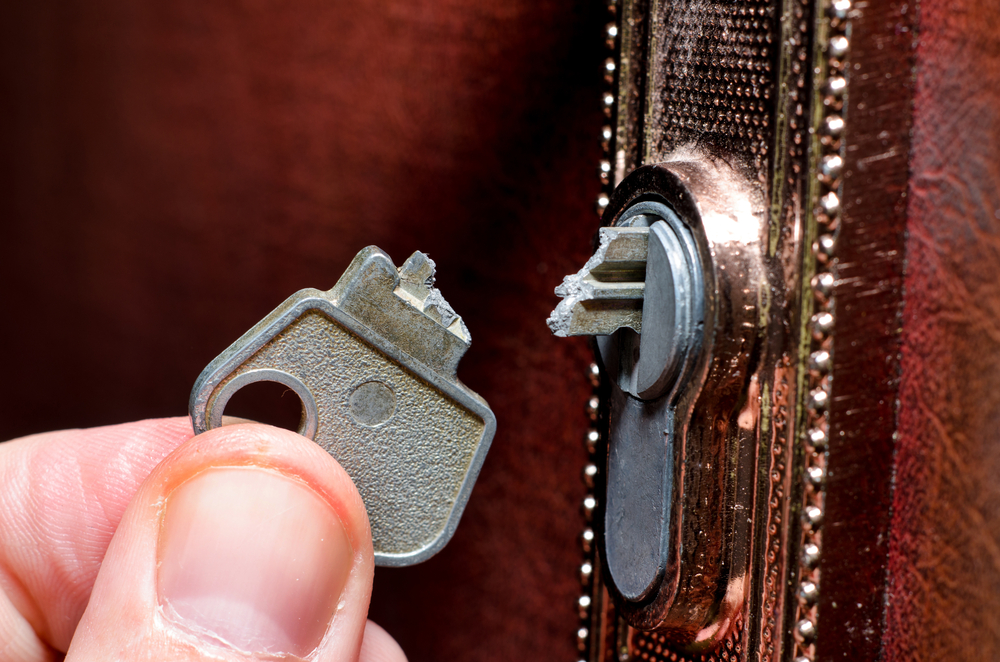
You’re arriving at your home after a long day of work. You’re excited to Key broken and stuck in the door? It happens!

What causes this breakage?

  1. Sometimes this occurs due to normal wear and tear on a key over time. The teeth on the key get worn down and can make it difficult for the teeth to catch onto the lock.
  2. In a hurry? Using excessive force can sometimes break a key in an instant.
  3. Other times it can be due to the key being a cheap duplicate!

No matter the cause of your key breaking in the door, we can all agree that it’s a huge pain. The question becomes, how can you extract it and move on about your day?

3 Ways to Extract a Broken Key

Tweezers

This is usually the go-to tool when a key breaks off in a door for most people. Two things you need to be aware of is how far the key has broken off in the lock, and how wide/thick the tweezers are. Thin tweezers that open wide are ideal for the job. Too thick tweezers won’t allow you to position them along the sides of the key, while tweezers that don’t open wide enough will not be able to grasp it.

The last thing you want to do is end up pushing the key further in the locking mechanism. This method will only work if there’s a little bit of key sticking out. Pushing the key deeper is more likely to happen if this isn’t the case.

Jigsaw Blade

This is probably the most time-consuming method of them all and will most likely require a trip to your local hardware store. However, if available, use two jigsaw blades when trying to extract a broken key. Insert both blades on opposite sides of the key.

For this to be successful, the blades must be thin enough. Be sure the blades are also faced down so that they can hook the teeth of the key. After doing so, simply turn and pull.

If it doesn’t work the first time, try again!

Super Glue

This should be your last option if all else fails. While we do not always agree with this method, because it can end up making things worse, this is an option that can be pulled off if done correctly.

The trick here is to utilize something small like a match and glue it to the key. Mind you, this only works if part of the key is sticking out. After creating a firm bond between the two, try pulling the key out of the lock!

Extracting a key isn’t easy all the time. It depends on the type of lock and how the key is broken.

Contact Your Chicago Locksmith

Don’t feel like extracting it? Tried these methods and still came up short? Give us a call at 877-787-3399. With 24/7 service, Quick Key Locksmith & Security can get the job done fast and affordable when needed. Not only can we remove the key, we can also create a duplicate key.

Rekey vs Lock Replacement: Which is Right for You?

Rekey vs Lock Replacement: Which is Right for You?

When it’s time to consider replacing your lock, it’s important to know the difference between rekeying and lock replacement. Many homeowners and business owners choose lock replacement over rekeying simply because they didn’t know rekeying a lock was an option.

In most cases, you have the option to rekey or replace your locks. Let’s look at what both are and why you might choose to rekey your locks over replacing them.

What is Lock Rekeying?

While it might seem self-explanatory, lock rekeying is the process of readjusting the internal parts of the lock to fit a different key. The goal is to change the design of the key needed to unlock your doors to ensure the old keys no longer work.

Without a trained residential locksmith, it’s very difficult to rekey a lock. When your locksmith rekeys your locks, you will keep the same locks you have, but they will not open with the old keys. you will need a new key, which the locksmith will also provide, to open the locks.

Lock rekeying offers a cost-effective way to change the key for your locks when you have lost your keys, a tenant moves out, or for any other reason.

Since you will use the current lock body and change the interior parts, it’s often less expensive than replacing your locks. While rekeying your locks is a cost-effective way to boost security, it’s only a limited security boost. If you want to gain even better security, replacing your locks is a better choice.

Why Choose Lock Replacement?

When you decide to replace the locks, you will actually replace the entire lock with a new one. This offers the ability to upgrade your locks to a more secure choice compared to what you currently have for your home or office.

Choosing the right locks means you need to consider the necessary factors. It usually starts with a look at home much you want to spend, along with the features you prefer. Some locks offer better security features and you can even choose smart locks if you want to gain some convenience features.

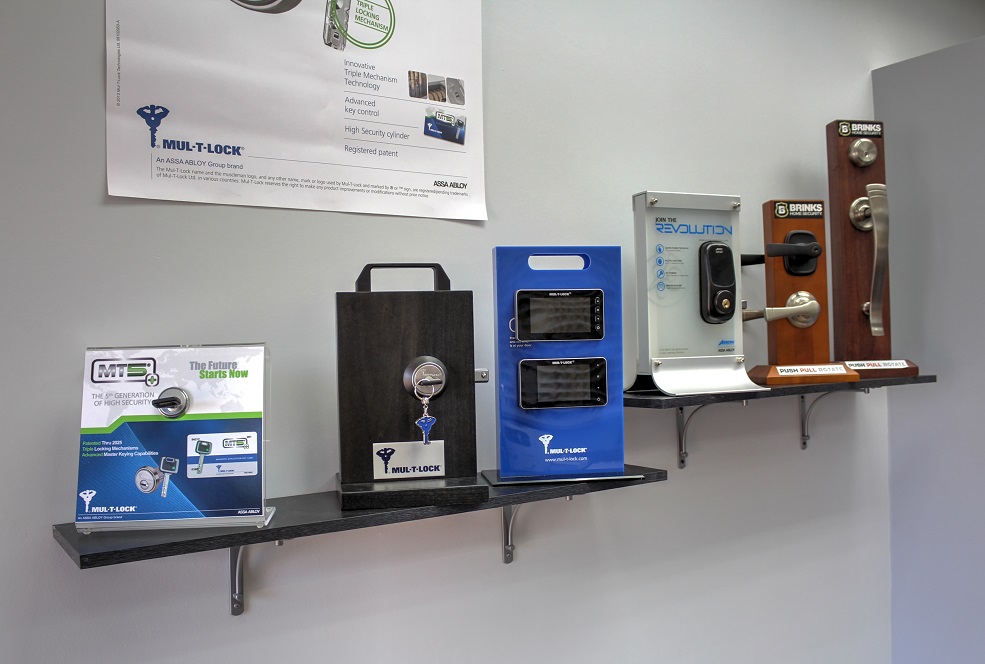
If you want to upgrade your locks to a very secure option, multi-point lock installation might be right for you. With a trained locksmith, these locks can be installed and will give you a more secure option since they lock in multiple places unlike single-point locks found on most doors.

With the ability to choose the locks you want and upgrade your security; lock replacement might be the right option for your needs. Compared to rekeying, lock replacement offers better security, but it will cost more. You will pay for both parts and labor when having new locks installed at home or at the office.

Whether you choose to rekey or replace your locks, it’s best to hire a trained Chicago locksmith to handle the job. Trying to do it yourself could result in disaster. Without proper installation of new locks, you might cause more harm to your security than good. Hire a professional and make sure your locks are either rekeyed or replaced properly.

Call Now Button